Table Of Content

In this article, we will explore the concept of design charrettes in detail, discussing their purpose, process, benefits, and best practices. Is there something about the traditional charrette that allows designers to better deal with the unexpected? A possible answer can be found in the charrette situation, popularized by the 1995 film Apollo 13. Under intense pressure, with the astronauts’ lives on the line, they need to quickly figure out how to build a filter to remove CO2 from the damaged space capsule. The increased influence of younger architects points to a potential positive aspect of both the old and the new forms of charrettes. A key aspect of charrettes is a solid understanding of the client’s objectives in the process.
Team Sketch
The challenge to the facilitator is to amplify the magnitude and diversity of ideas, and then build up the best solution. A design charrette process is flexible and effective means of design problem solving that can be used within a single household or community-wide event. It’s fun to get together and work intensely with others for a short term - especially when promoting new levels of prosperity in our own lives and for our community.
Step 1: Identify the Problem Area and Provide Context
It is also based on an ideology that defines time as a scarce resource, ignoring the fact that most architects enjoy designing—some so much that they do not mind doing it, occasionally, at 3 a.m. The industrialized practice of architecture has not resolved the inherent tension between architecture as a business and architecture as a creative act. It is often used early in a planning process to provide useful ideas and perspectives from concerned interest groups. By defining the project scope, you'll set the stage for a productive and focused design charrette, ensuring that your team can efficiently collaborate and develop creative solutions. Armed with the results and finding of the design charrette, take advantage of the gained momentum. Especially in work that touches the neighborhood and downtown realms, your team should aggressively begin marketing and promoting the plan.
HACLA: Investing In People & Place
Once you have your big idea, you can make your case with all your reasons and all of your boards filled with supporting evidence. Because everyone was involved in the finished product, everyone can explain and defend it. His background in sustainability and community-based design give him a unique vantage point. This website is using a security service to protect itself from online attacks. There are several actions that could trigger this block including submitting a certain word or phrase, a SQL command or malformed data. Illustration from National Charrette Institute Web site illustrating the process used during the second phase.
Create an Environment of Consistent Participation
You will also want to have some large pads of paper flipcharts and bold markers for each table group. You might also want to provide name tags and additional paper and pens for participants. Many times I have seen multi-colored post-it notes used as a color code to share ideas. Also, little round, colored dots are helpful for "voting" on favorite solutions. A valuable piece of vacant land in the core of a vibrant community is being developed into a parking lot.

B. Key Issues in Planning and Implementing an ID Charrette
Congress for the New Urbanism Hosts Neighborhood Charrettes - charlottenc.gov
Congress for the New Urbanism Hosts Neighborhood Charrettes.
Posted: Tue, 06 Jun 2023 07:00:00 GMT [source]
As the language about high-performance hints, this approach greatly favors quantifiable aspects of a building. This design philosophy is preferred by engineering and business, because it rests on the application of accepted scientific principles. Its limitation, as Donald Schön eloquently put it, is that it cannot address new or unique design issues. Process is critical to successful, balanced designs; and a key step in the design process is an integrated design charrette. In this Resource Page, a charrette is defined as an intensive workshop in which various stakeholders and experts are brought together to address a particular design issue, from a single building to an entire campus, installation, or park. The term can also be applied to shorter, focused project team meetings, project planning meetings, brainstorming sessions, and extensive community visioning events.
Thus, the invitation list and timing must be thoroughly considered and discussed to maximize interaction through broad-based participation. Follow-up work must be carefully considered both before and during a charrette. Charrettes are sometimes loosely described as brainstorming sessions, or product concepting workshops, but this may not in fact be accurate. Charrettes are a particularly form and process of group decision-making, distinct in several ways from how brainstorming and product concepting are actually conducted in group settings. The path may be long and filled with egos and disagreements, but true innovation awaits those who can stay on it. If you’re going to host a design charrette for your next big project, be prepared with these guidelines.
Hamilton to Hold Pedestrian and Traffic Charrette Towns loudounnow.com - Loudoun Now
Hamilton to Hold Pedestrian and Traffic Charrette Towns loudounnow.com.
Posted: Fri, 14 Jul 2023 07:00:00 GMT [source]
We have all known accomplished designers who could keep to a schedule, but who never stayed up all night. Could it be that these are designers with the selfdiscipline to temporarily “close off” their inventory of resources and time in order to find concrete solutions? If so, this suggests that architectural educators might help train future architects in these skills, and that architecture firms could regularly organize relatively painless mini-charrettes. Extrapolating from the ideas of Lévi-Strauss, Schön, and Louridas, I am led to conclude that there are aspects of the old, end-of-the-project charrette as a design process that remain relevant and valuable. This helps explain their persistence in architecture schools and for competition entries in the profession that are “design and idea driven.” The two forms of the charrette stress alternative kinds of design thinking. The new charrette is founded on planning and problem-solving, the old on improvisation and bricolage.
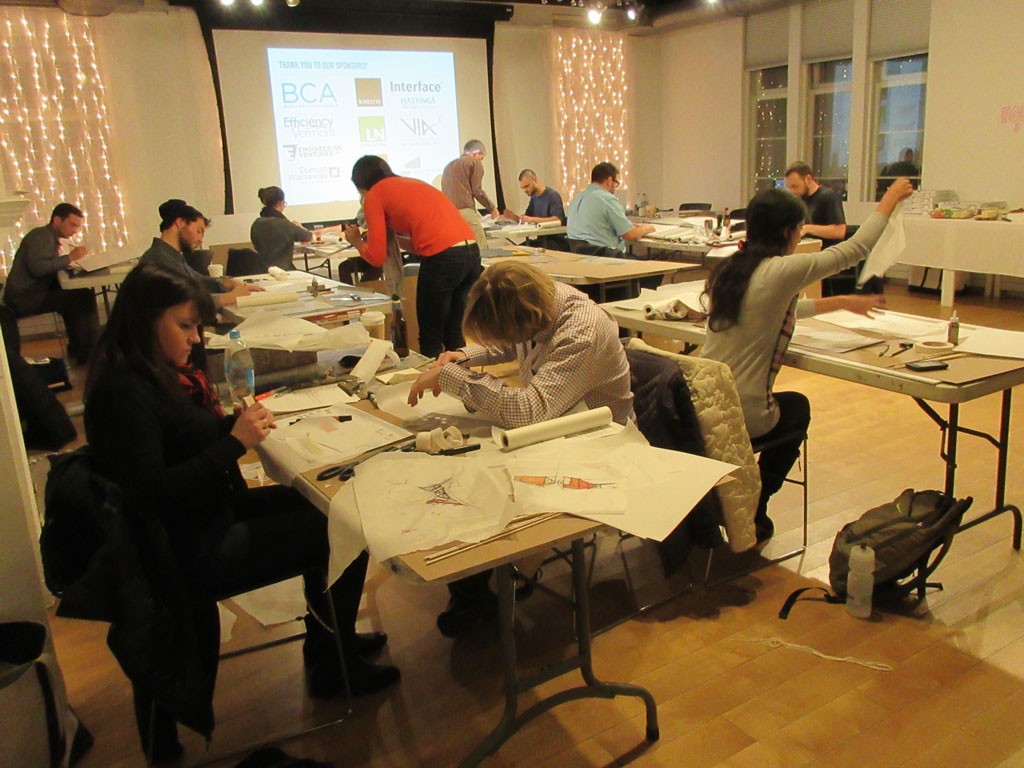
Charrette participants are able to bounce off of one another and consider the issues in ways they may have never considered before, which allows designers to effectively collect diverse perspectives that will influence the design decisions. Design charrettes offer a range of exciting variations and complementary plays that can enhance collaboration and foster holistic thinking. By incorporating alternative plays and follow-up plays, teams can continue to explore ideas and generate innovative solutions long after the initial charrette has concluded. During a design charrette, participants have the opportunity to sketch their ideas and present them to the group.
Many neighbors have expressed their frustration as they’ve expected it to turn into something that can bring more economic and social values to the community. The local neighborhood association wants to host a community charrette session to think about turning the vacant lot into a community green space and take the feedback to a next zoning hearing. A successful charrette results in a feasible plan that requires minor revision and is supported by the stakeholders throughout the implementation process. Significant outcomes relating to aspects of representation, preservation, foundation and expansion are typically well reflected. A more important question is whether, even while recognizing the valid association of traditional charrettes with poor time management and exploitive labor practices, a case can be made for their survival in the profession. Such a case would have to depend on evidence that the old charrettes actually contributed to better designs.
By fostering collaboration and trust-building, design charrettes can overcome planning challenges and address the fear of change. These interactive workshops create inclusive spaces for community members, decision-makers, and experts to work together in solving complex problems and shaping the future of their environment. Charrettes take place in many disciplines, including land use planning, or urban planning. In planning, the charrette has become a technique for consulting with all stakeholders.
It’s a space where innovative thinking is given room to breathe, fostering a culture of openness and exploration. By involving the entire team in the design decisions, the outcomes become more meaningful and impactful. So, get ready to unleash your creativity and be part of something extraordinary. Yet it is also possible to argue that the two forms of the charrette can be complementary. The high-performance charrette starts the necessary process of “closing off” the designers’ inventory, and it introduces the various members of the project team to one another, setting the stage for the continued formation of social bonds. Furthermore, the case can be made that the shift to the bricolage mode of design thinking can be accomplished artificially rather than as the result of a crisis or of procrastination.
Armed with the results and findings from the design charrette, others will being to take notice and you will see progress before you know it. A design charrette is an intense collaborative effort used to create a detailed design or plan for a specific issue or geographic area. While there is flexibility as to how to conduct a charrette, it is generally an involved process where the main activity takes place over several days, and the entire charrette planning process can be months in duration. Many community members still have their own unique experiences and interactions even if they all live in the same community.


No comments:
Post a Comment